
TCT Shenzhen 2026: a student-priced metal 3D printer and a surprise from Formlabs
Inside TCT Shenzhen 2026: the SnowPod desktop metal printer, Formlabs Form Studio 1, Creality K3, SPARKX i8, the Longer ePrint UV printer and new 3D scanners.
Does a metal 3D printer at a student-friendly price really exist? In mid-October 2026 I visited TCT Shenzhen 2026 — one of the leading 3D printing shows in South China — to see the newest technology up close: the SnowX SnowPod desktop metal printer, Formlabs Form Studio 1, Creality K3, SPARKX i8, the Longer ePrint UV printer and a wave of new 3D scanners.
This article sums up what I saw. Watch the video above to see the machines running.
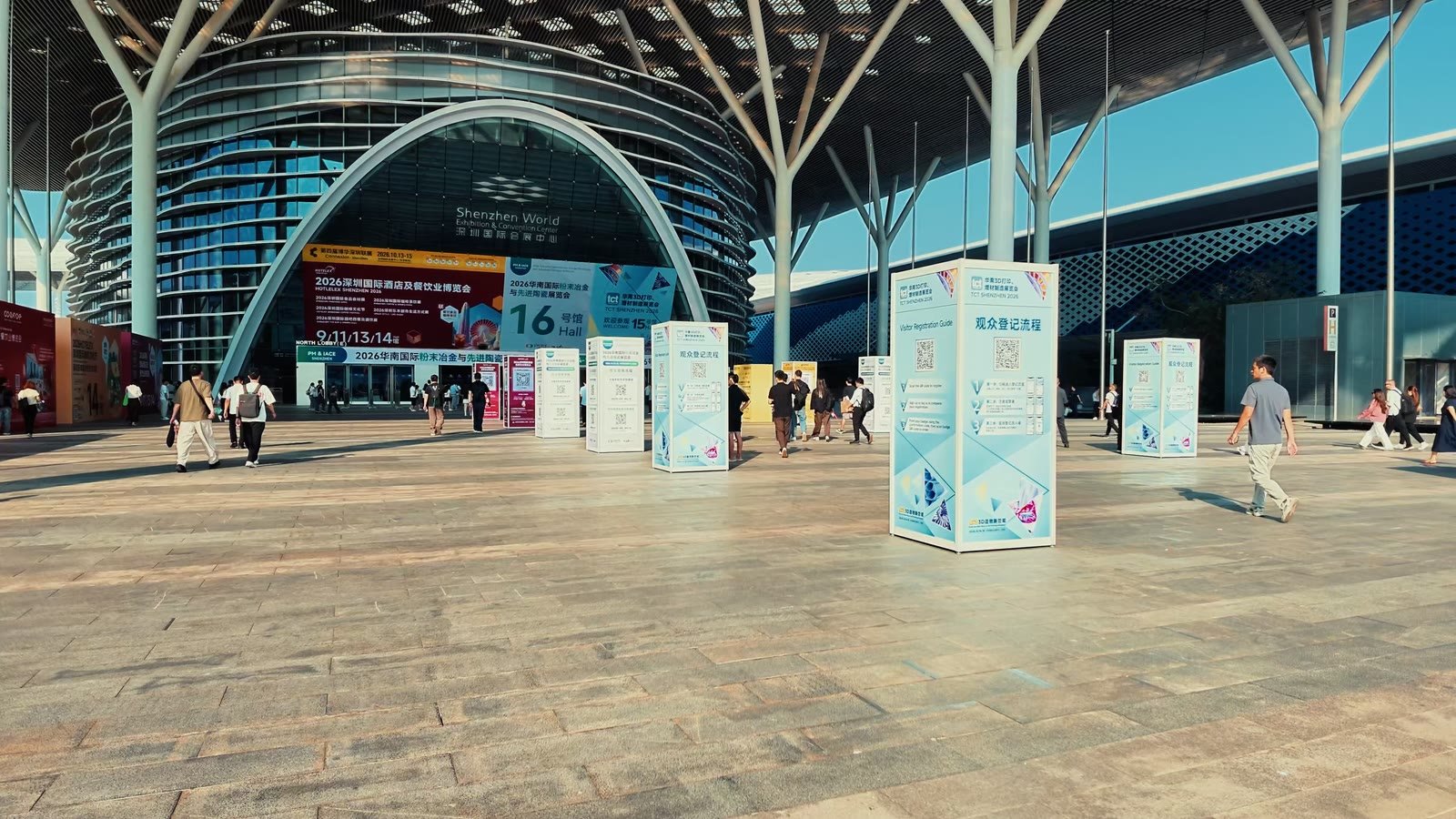
Show overview
TCT Shenzhen ran alongside the 2026 South China International Powder Metallurgy & Advanced Ceramics Exhibition (PM & IACE Shenzhen). So beyond desktop 3D printers, there were plenty of companies working on powder materials, technical ceramics and industrial manufacturing. I spent most of my time around FDM and resin printers, UV printers, 3D scanners, materials and the 3D Genius Hub.
Maker Talk at the 3D Genius Hub
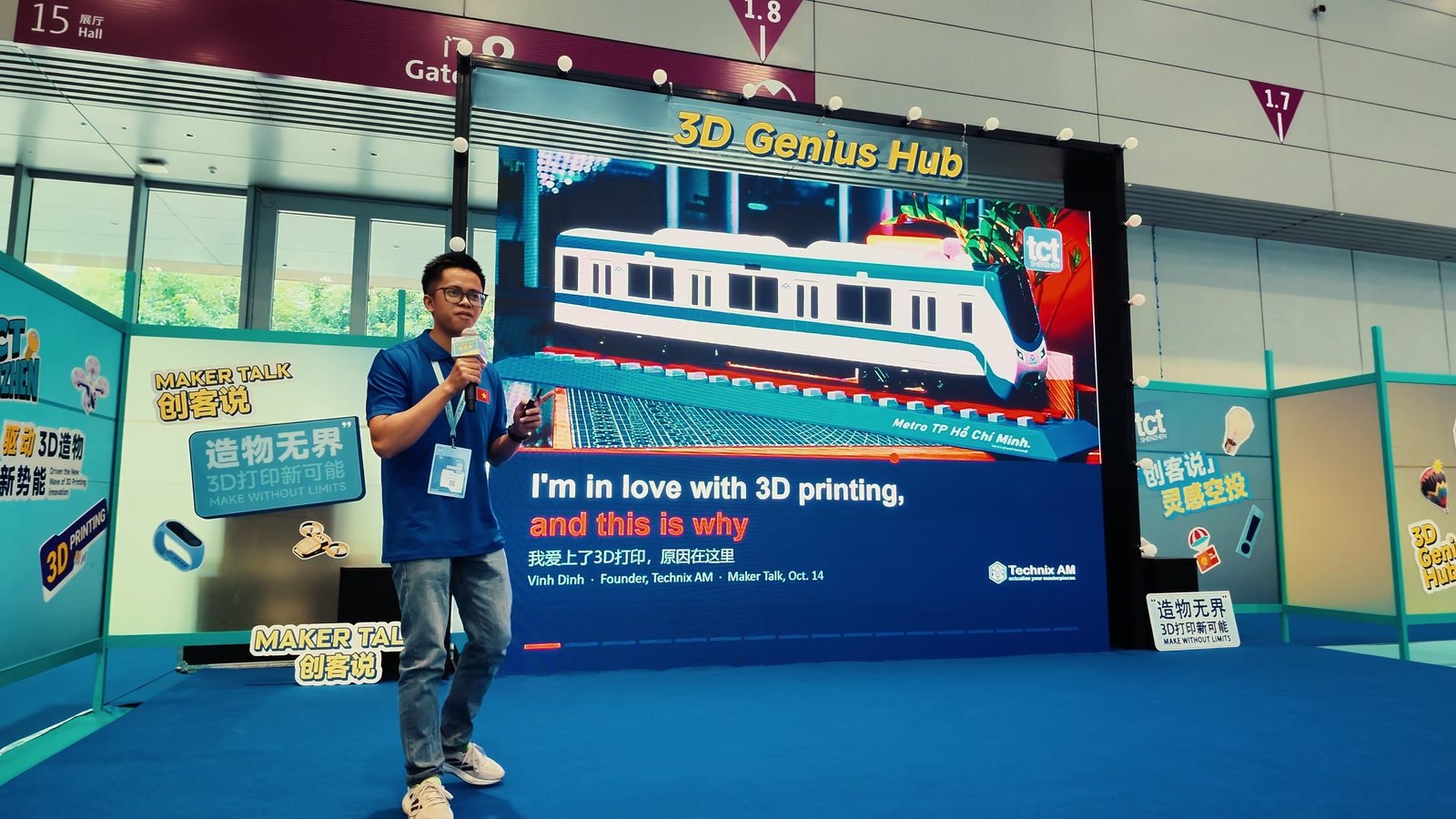
This year I got to take the Maker Talk stage at the 3D Genius Hub with a talk titled "I'm in love with 3D printing, and this is why" — why I'm hooked on 3D printing and the projects we've built at Technix AM.
Formlabs Form Studio 1 — the biggest surprise
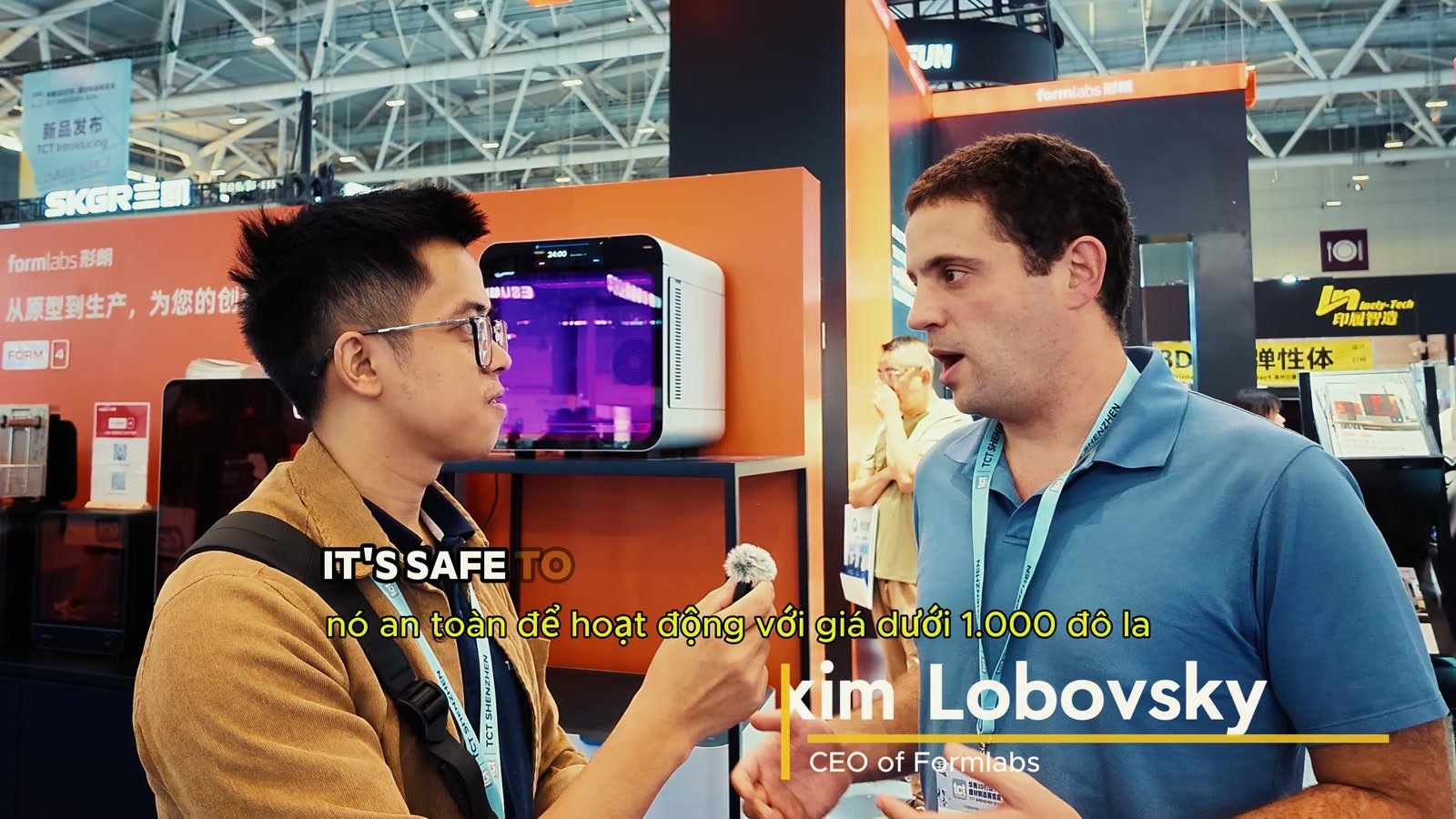
The Formlabs booth was one of the busiest at the show, and I got to talk with Max Lobovsky, CEO of Formlabs.
The headline product was Form Studio 1, pitched as "Pro Resin 3D Printing for Anyone". According to the slide shown at the show:
| Item | Manufacturer's claim |
|---|---|
| Speed | most parts in under 2 hours; layer-by-layer full-layer curing |
| Safety | low odor, UL GREENGUARD GOLD certified |
| Reliability | 98% print success rate |
| Materials | open system, works with third-party resins |
| Price in China | from CNY 4,999; Alpha series resin from CNY 249/L |
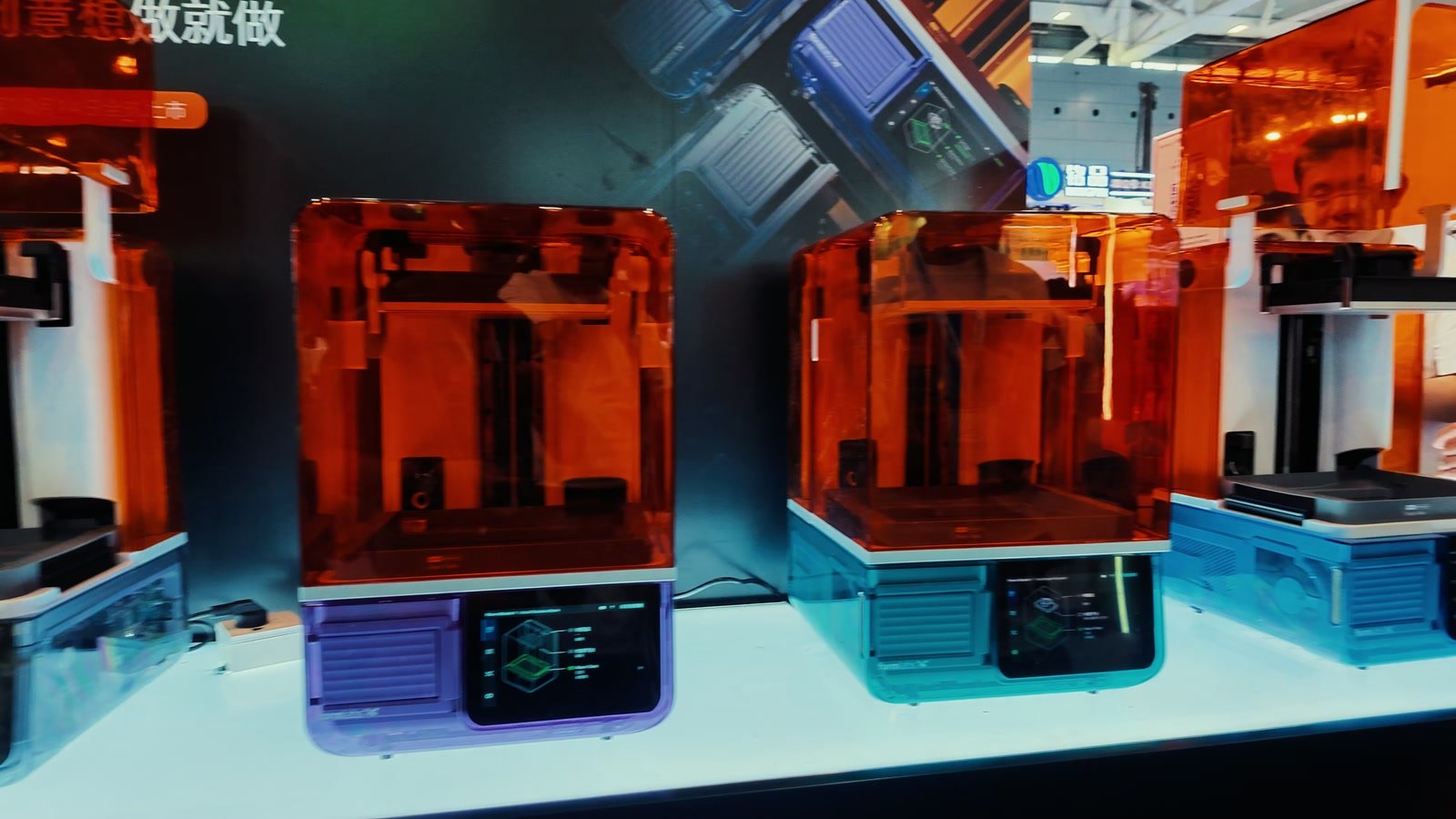
For a brand that has always sat in the professional segment, that price point is a very notable move.
SnowX SnowPod — a desktop metal 3D printer
This is the answer to the question at the top. SnowX, a company based in Suzhou, China, showed SnowPod: a laser powder bed fusion (LPBF/SLM) metal printer that the company positions as a desktop metal 3D printer for personal users. Yang Gao, CTO of SnowX, walked me through the whole process at the booth.

Key specs
| Item | SnowPod |
|---|---|
| Technology | laser powder bed fusion (LPBF) |
| Build volume | 80 × 80 × 100 mm |
| Laser spot size | 40 µm (industrial machines usually use 80–120 µm, according to Yang Gao) |
| Layer thickness | 30–60 µm, adjustable |
| Launch material | 316L stainless steel |
| Machine size | 360 × 360 × 660 mm |
| Shielding gas | nitrogen, supplied by the companion NitroPod generator |
| Filtration | 2 × HEPA H13 + 1 × HEPA H14 |
| Powder recovery | about 90%, depending on part geometry |
Specs compiled from the booth interview and SnowX's announcement published by 3D Printing Industry.
The workflow: barely touching the powder
What I liked most about SnowPod is how it handles metal powder, which is dusty and unsafe to inhale:
- Powder comes in a sealed powder cartridge that simply slots into the feed inlet.
- Unused powder is collected in a collection box so it can be reused.
- After printing, the platform rises and the recoater pushes the part out of the chamber into a clear transfer box. You open the door and take the box out without touching the powder directly.
- Residual powder around the part (which acts as support) is handled with water: mixed into a slurry that is easy to clean, then emptied into a waste box.
- The machine uses 2 HEPA H13 filters (rated 99.95% for particles of 0.3 µm and larger) plus 1 HEPA H14 filter. According to the announcement, it also has PM2.5, gas, temperature and humidity sensors and door interlocks that only open when safety conditions are met.
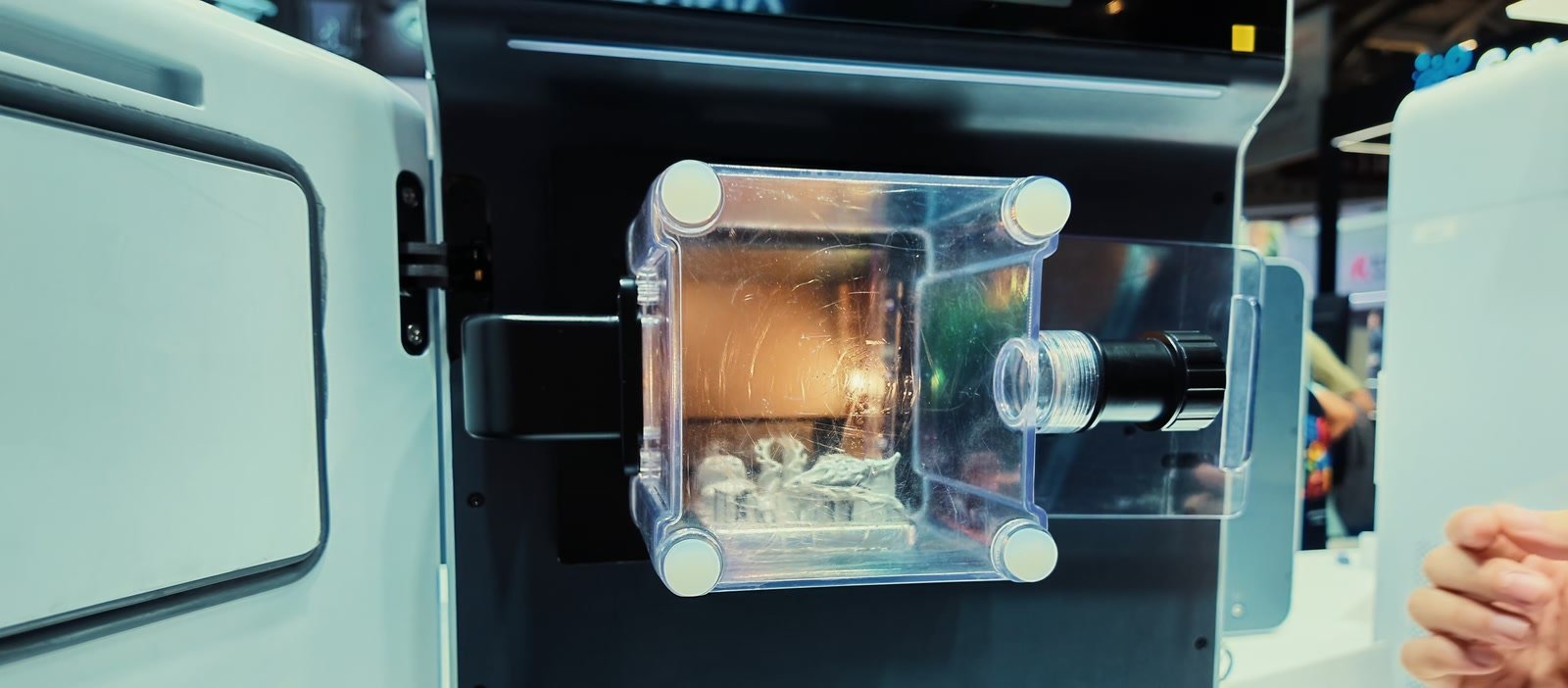
Sample parts and post-processing
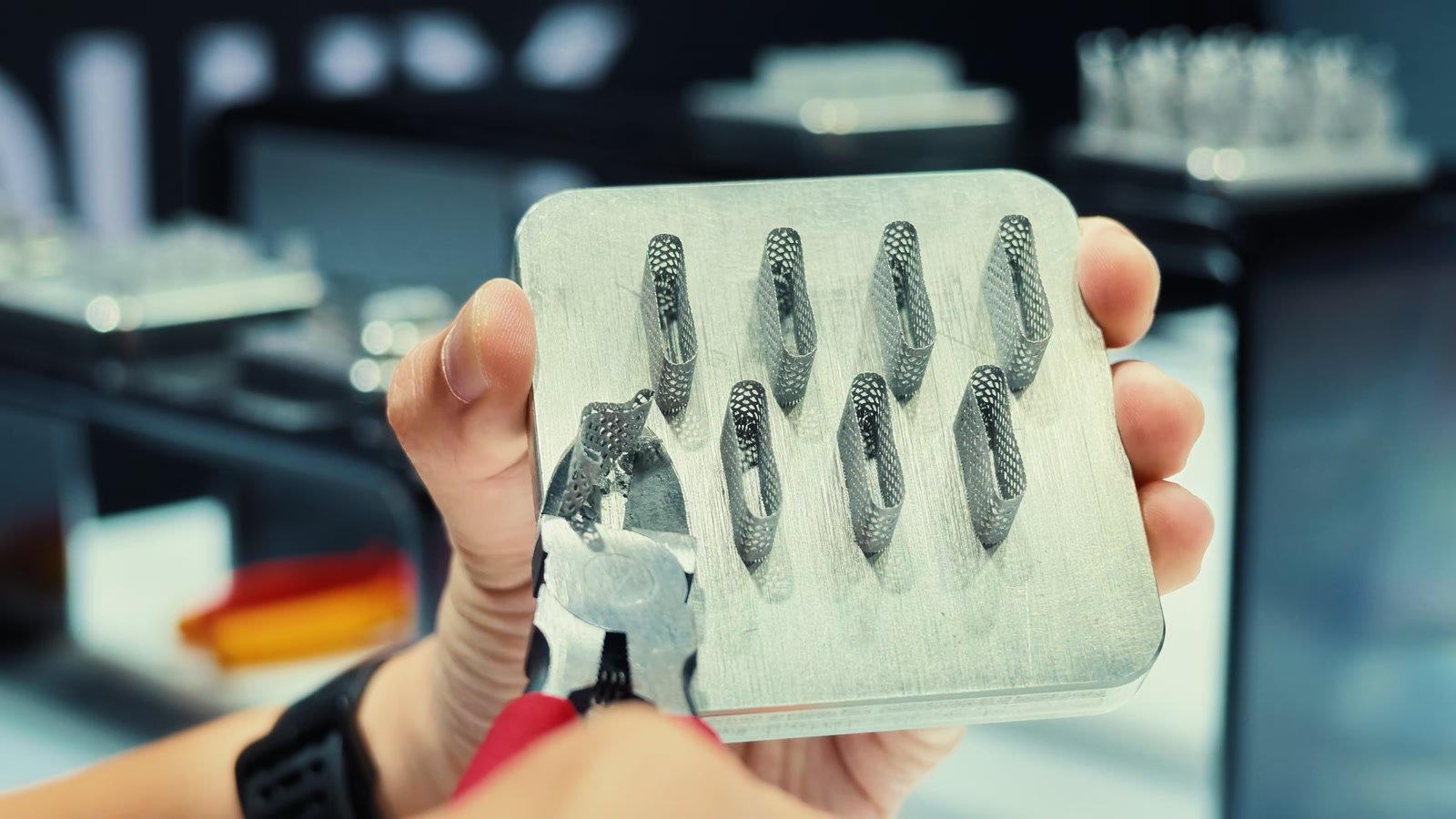
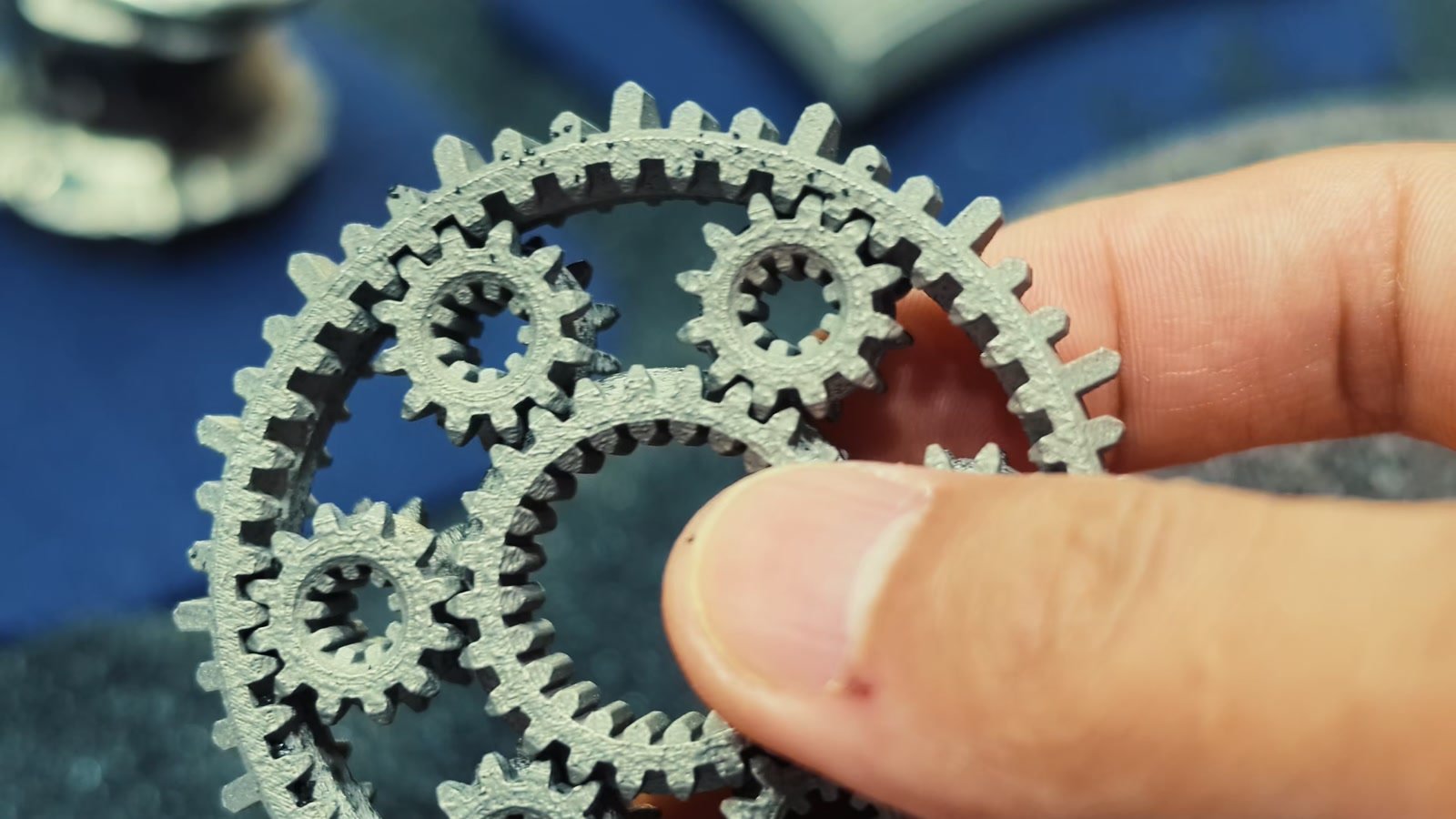
Supports are generated automatically by the software using SnowX's new support design. For post-processing, parts simply snap off the build plate with pliers. With a 40 µm laser spot, the printer handles fairly small, precise details. Samples on display included print-in-place gears that actually turn, rings, pendants and small models.
Price and launch
According to Yang Gao, SnowPod will launch on Kickstarter about a month after the show (SnowX has announced Q4 2026) and head to Formnext (Germany) for the global market, with a big discount for early backers.
SnowX has not announced an official price yet. Some outlets mention a Kickstarter price under USD 6,000, but SnowX hasn't confirmed it. So whether it's truly "student-priced" depends on the official figure — and remember to factor in 316L powder and the NitroPod nitrogen generator. I'll update this article once there's official information.
Creality: K3 and a lineup of new scanners
Creality had a lot of new products on show:
- Creality K3 — the brand's new FDM printer.
- Sermoon X1 and Sermoon P1S scanners — live scanning demos of an Egyptian cat statue at the booth.
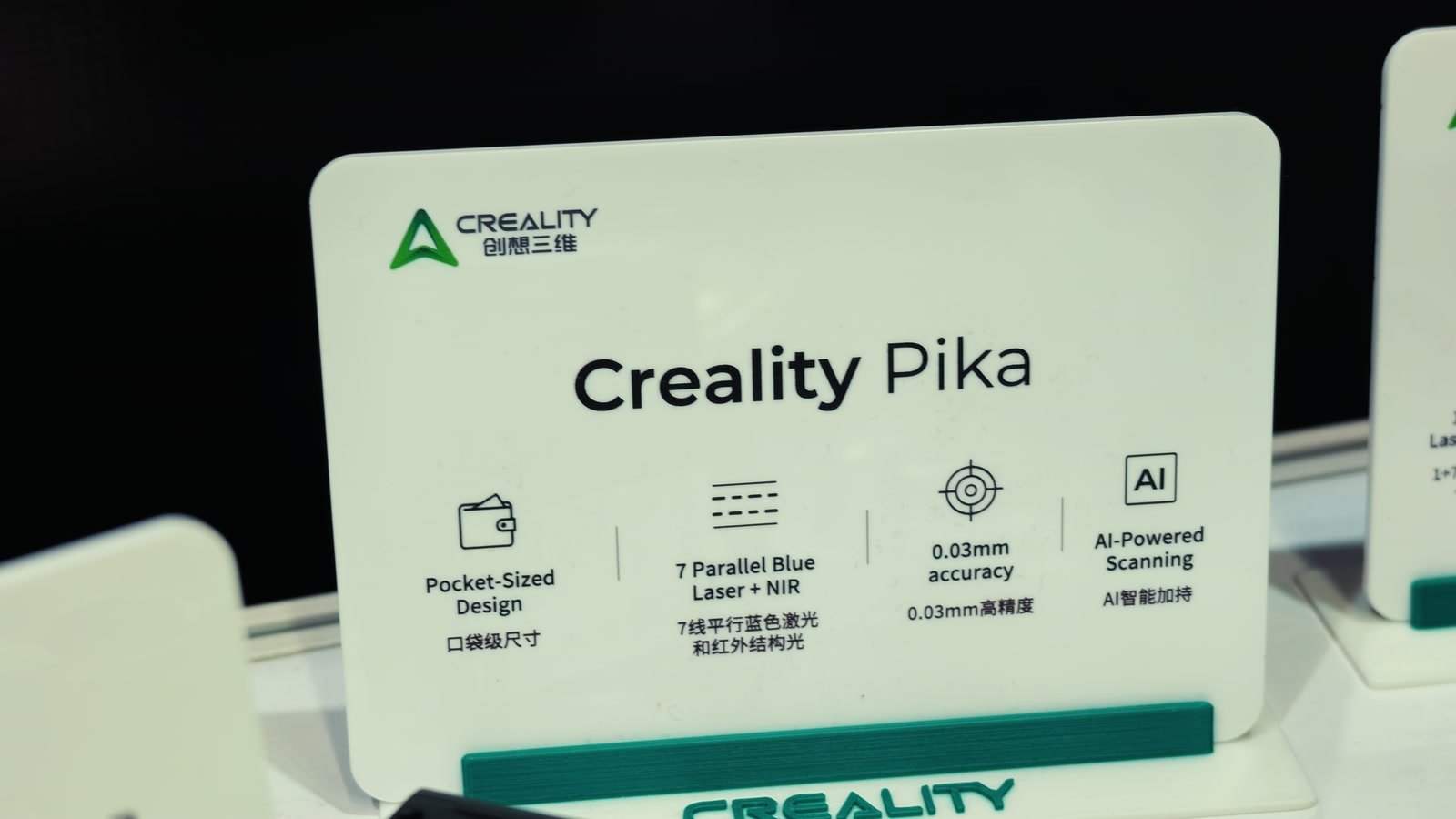
- Creality Pika — a pocket-sized scanner with 7 parallel blue lasers plus near-infrared (NIR), 0.03 mm accuracy and AI-assisted scanning (per the booth display card).
SPARKX also brought its new i8, alongside an i7 printing live at the booth.
Longer ePrint — dual-head desktop UV printer
One clear trend at TCT this year was desktop UV printing. The Longer booth was packed, showing the ePrint, presented as a dual-head, 4-in-1 desktop UV printer. Samples included T-shirts, helmets, artwork, keyboards and phone cases.
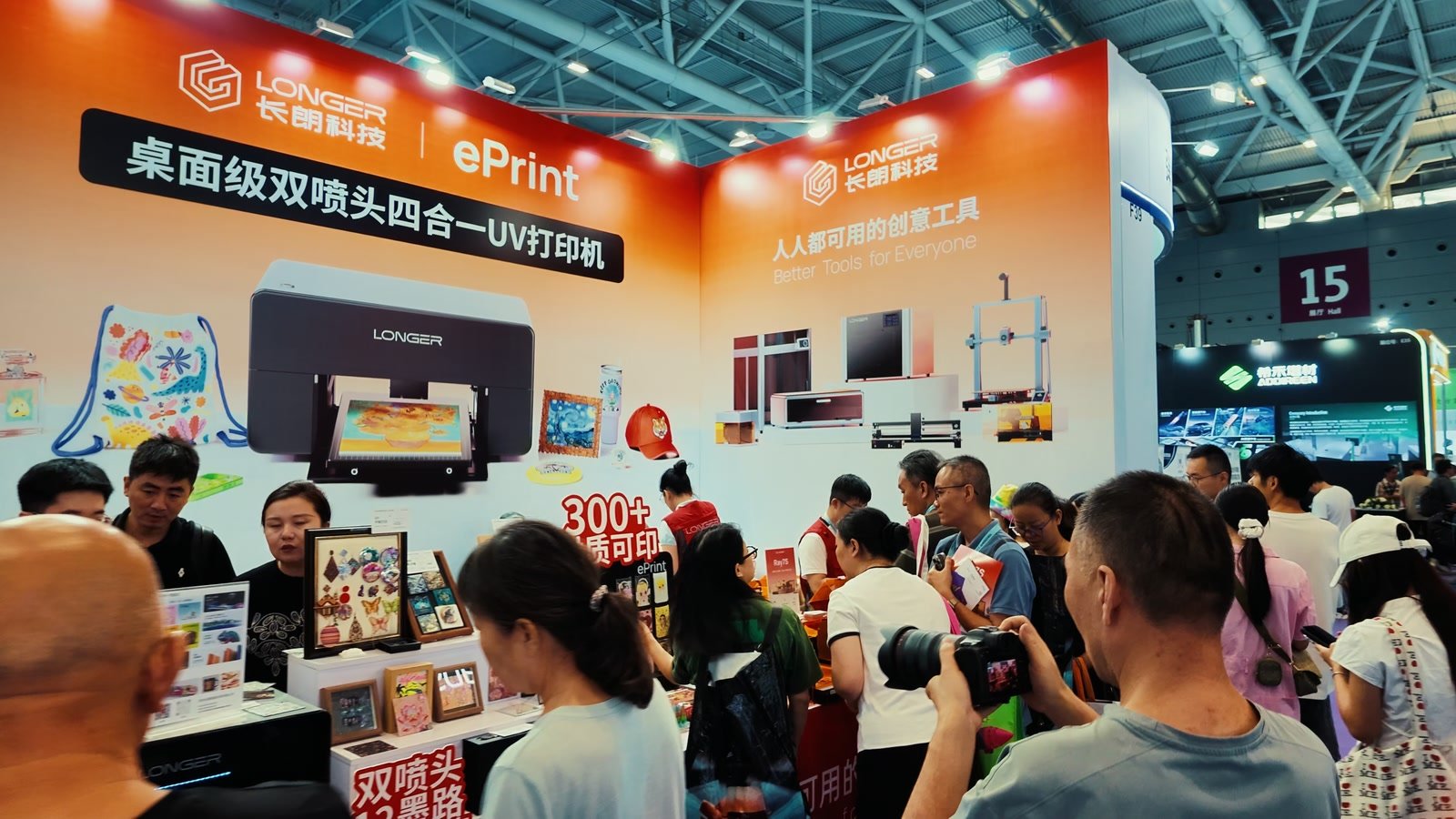
According to Longer's website when I checked (October 2026), the ePrint supports 3D color relief up to 15 mm and printing across height differences of up to 10 mm. The Dual UV version is listed from USD 2,499 for the standalone machine and USD 3,859 for the all-in-one bundle.
Other highlights
- Polymaker received a low-VOC emission certificate from TÜV Rheinland for its G-Flex PETG.
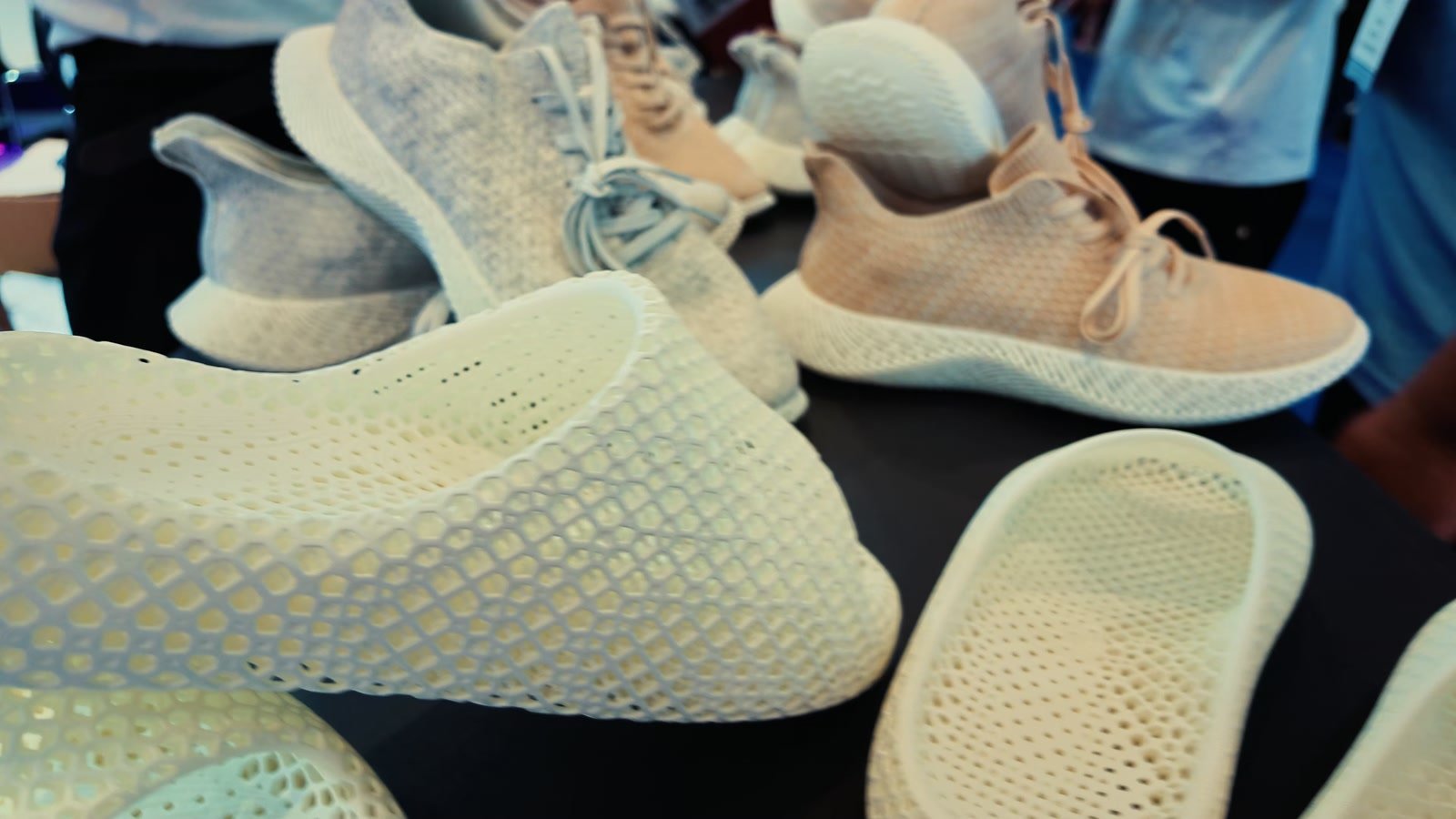
- 3D printed lattice shoes and midsoles appeared at several booths.
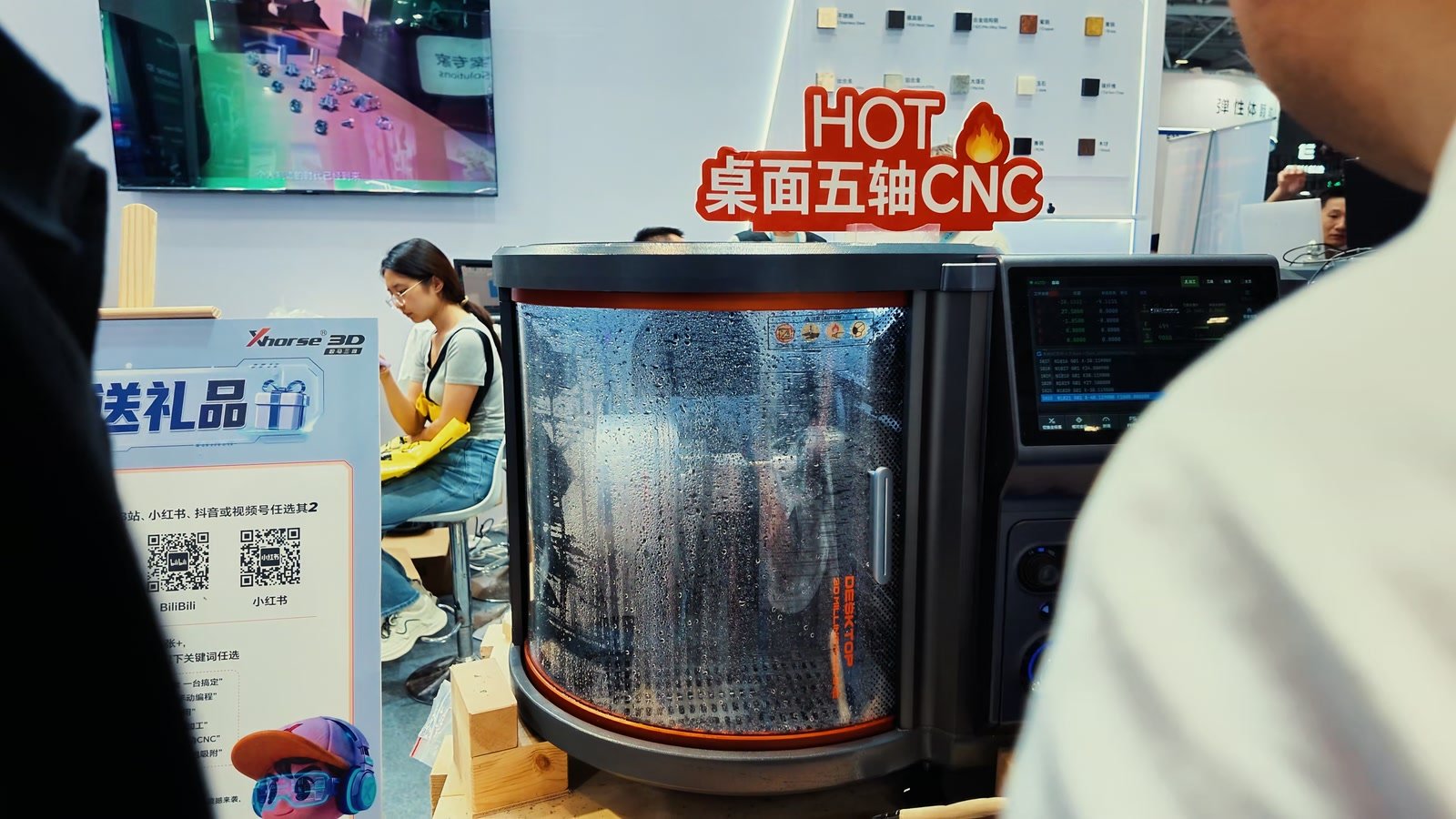
- Desktop 5-axis CNC machines also showed up next to the 3D printers.
- Many new handheld 3D scanners, a sign that 3D scanning is becoming more common and accessible.
Wrapping up
TCT Shenzhen 2026 pointed to a few clear directions: metal printing is shrinking down to desktop size, big names like Formlabs are bringing professional resin printing to more accessible prices, and UV printers and handheld 3D scanners were everywhere.
If any product in this article interests you, leave a comment under the video. I'll try to dig deeper or do a full review in the future.